Lamy Chabolle
Contact details and information
Hours
Open from Monday to Saturday, 11:00 a.m. to 7:00 p.m.

About
Olivia Lamy Chabolle, an antique dealer for twenty years, is based at 14 Rue de Beaune in the 7th arrondissement of Paris.
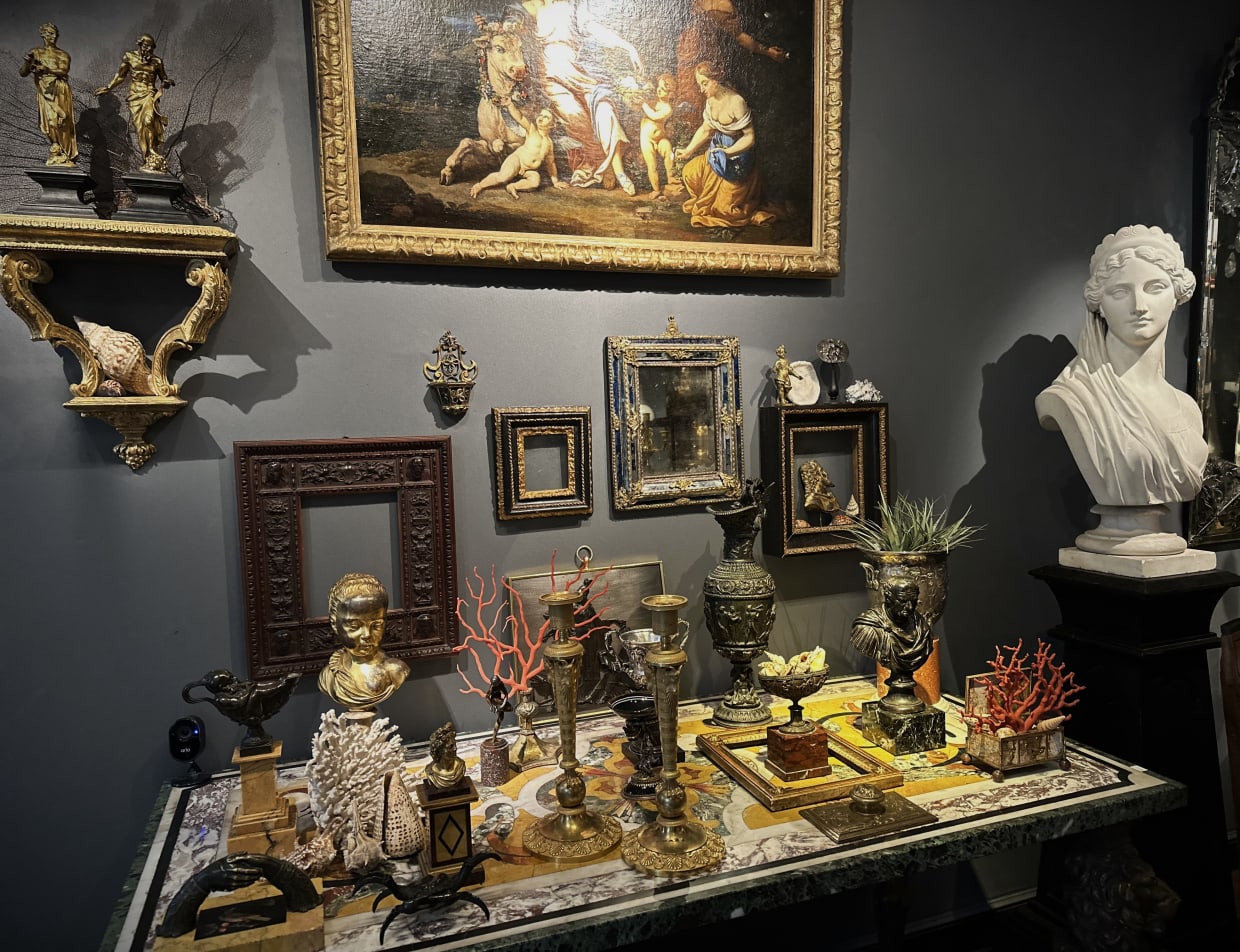
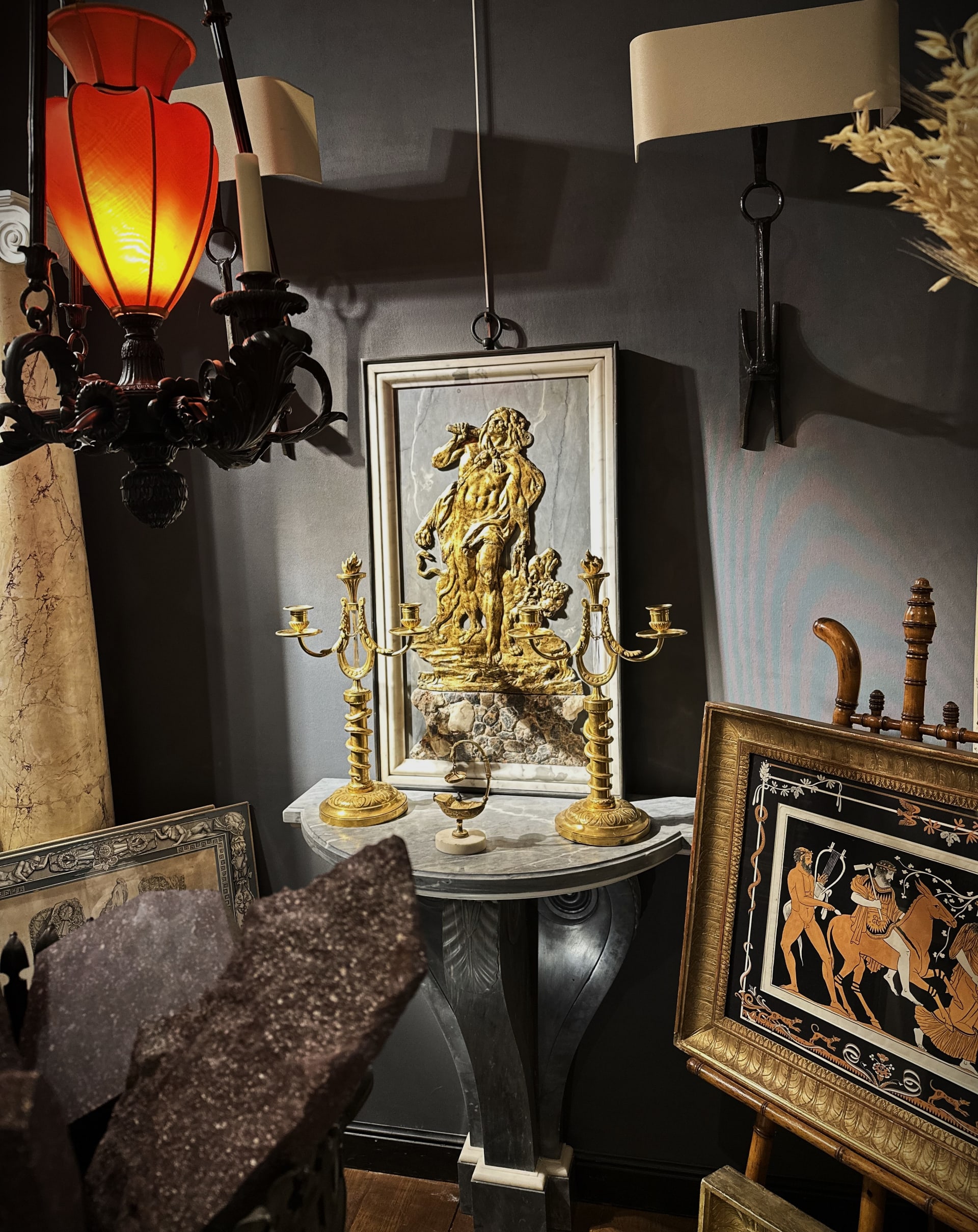
Located in the heart of the Carré Rive Gauche, near Saint-Germain-des-Prés, the gallery adopts a neoclassical spirit and presents a curated selection of decorative art objects, furniture, and sculptures from the 17th to the 20th century, chosen for their aesthetic qualities and authenticity.
Since 2015, David Prot has partnered with Olivia Lamy Chabolle in their gallery at 14 Rue de Beaune. Together, they share their passion for the antiques trade in the spirit of this historic district.
In a neoclassical spirit, she presents a curated selection of decorative art objects, furniture, and sculptures from the 17th to the 20th century.
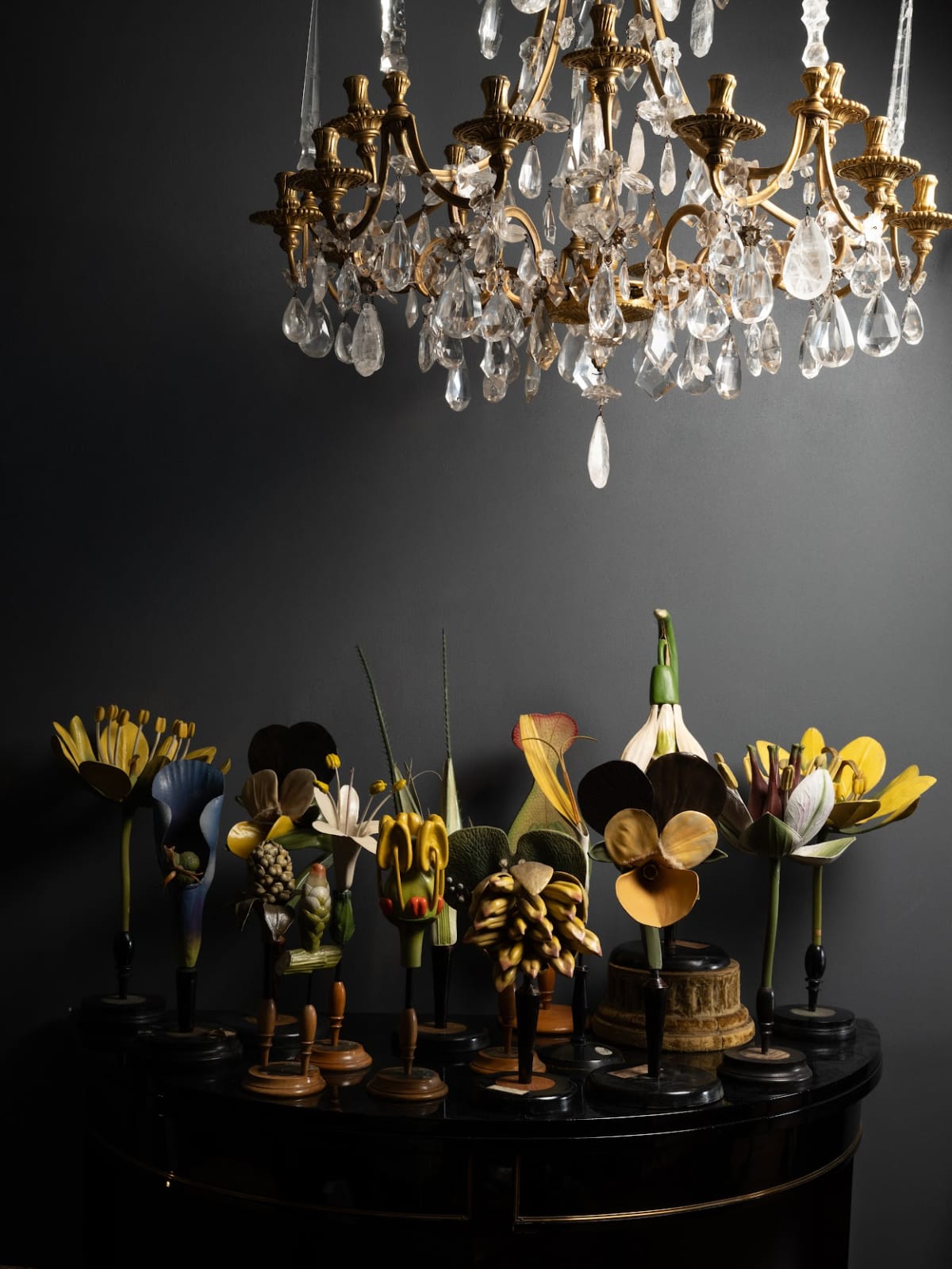
Set of Botanical Models by Brendel, Late 19th Century, and a Gilt-Bronze and Rock Crystal Chandelier, Mid-18th Century
Robert Brendel began his career in Breslau in 1866, producing enlarged, scientifically accurate models of flowers and plants. Designed as teaching aids for universities across Europe and the United States, these botanical models quickly earned their creator international recognition, receiving medals at major exhibitions in Moscow (1872), Cologne (1890), and Chicago (1893). Following Robert Brendel's death in 1898, his son Reinhold relocated the company to the outskirts of Berlin, where it continued to flourish and received further awards at international exhibitions.
This Italian chandelier, dating from the mid-eighteenth century, features ten candle arms radiating from a central stem and is surmounted by a royal crown. Crafted in mercury-gilt bronze, it is lavishly adorned with finely cut rock crystal drops, fleurons, leaves, and beads. The remarkable variety of their shapes and sizes creates an exceptional interplay of light.
During the eighteenth century, northern Italy became a major centre for the production of rock crystal chandeliers. The discovery of new deposits in Central Europe made this precious material—renowned for its exceptional clarity and high refractive qualities—increasingly available for use in the decorative arts. Its rarity, outstanding quality, and the extraordinary skill required to cut and polish it made rock crystal a luxury reserved for the wealthiest patrons.
With its refined elegance, richly ornamented decoration, and royal crown, this chandelier is a superb example of the Italian barocchetto tradition of the eighteenth century.
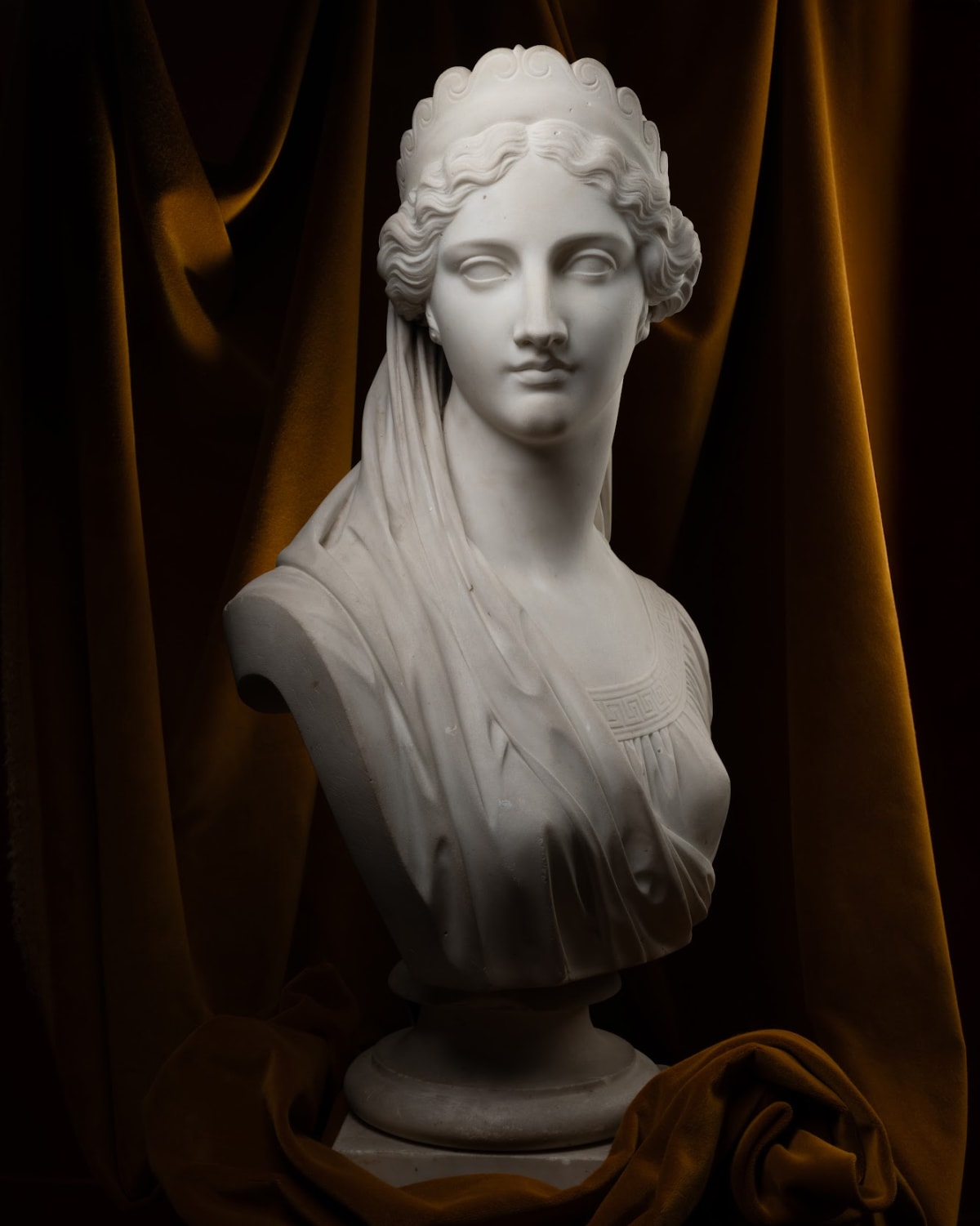
Carrara Marble Bust of Helen of Troy by Edward Arlington Foley, London, 1874
This Carrara marble bust of Helen of Troy is one of the final works by the Irish sculptor Edward Arlington Foley (1814–1874). Trained in Dublin before settling in London, Foley exhibited regularly at the Royal Academy between 1834 and 1873, specializing in portrait busts and idealized figures inspired by Greek mythology. Despite his sustained artistic activity, he remained overshadowed by his younger brother, John Henry Foley, one of the most celebrated sculptors of the Victorian era.
Bankrupted and imprisoned for debt at the end of 1873, Edward Arlington Foley took his own life in May 1874. Dated the same year, this bust is likely his last work and may be regarded as his artistic testament.
The iconography of this Helen draws upon John Flaxman's celebrated illustrations for the Iliad, particularly in the veil and diadem that she wears. The sculpture belongs to a series of idealized female figures through which Foley explored the classical ideals of feminine beauty derived from Antiquity.
Widely regarded as the artist's masterpiece, the bust is distinguished by the virtuoso treatment of the hair concealed beneath a delicately carved veil, as well as by the refinement of the facial features and the drapery, hallmarks of Foley's mature style.
A curated selection of decorative art objects, furniture, and sculptures from the 17th to the 20th century, chosen for their aesthetic qualities and authenticity.