JM Béalu & Fils
Contact details and information
Contact
3 Rue du Bac, 75007 Paris, France
Hours
Open Monday from 2:30 pm to 7:00 pm, Tuesday to Friday from 11:00 am to 1:00 pm and from 2:30 pm to 7:00 pm, and Saturday from 2:30 pm to 7:00 pm. Closed on Sundays.

About
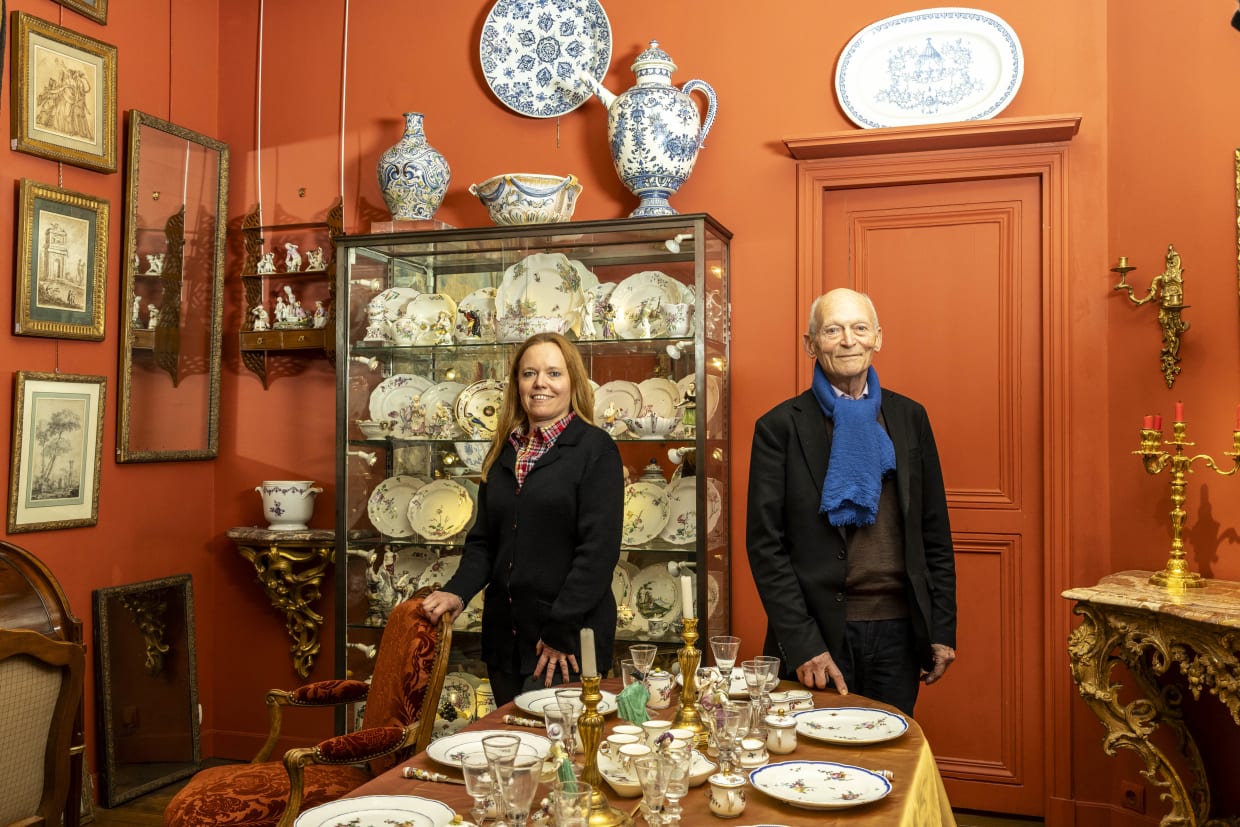
Christian Béalu, C.N.E.S. expert and his daughter Julie CNE expert, are initiators of the Circuit of Ceramics and Arts du Feu, held annually in Paris each September.
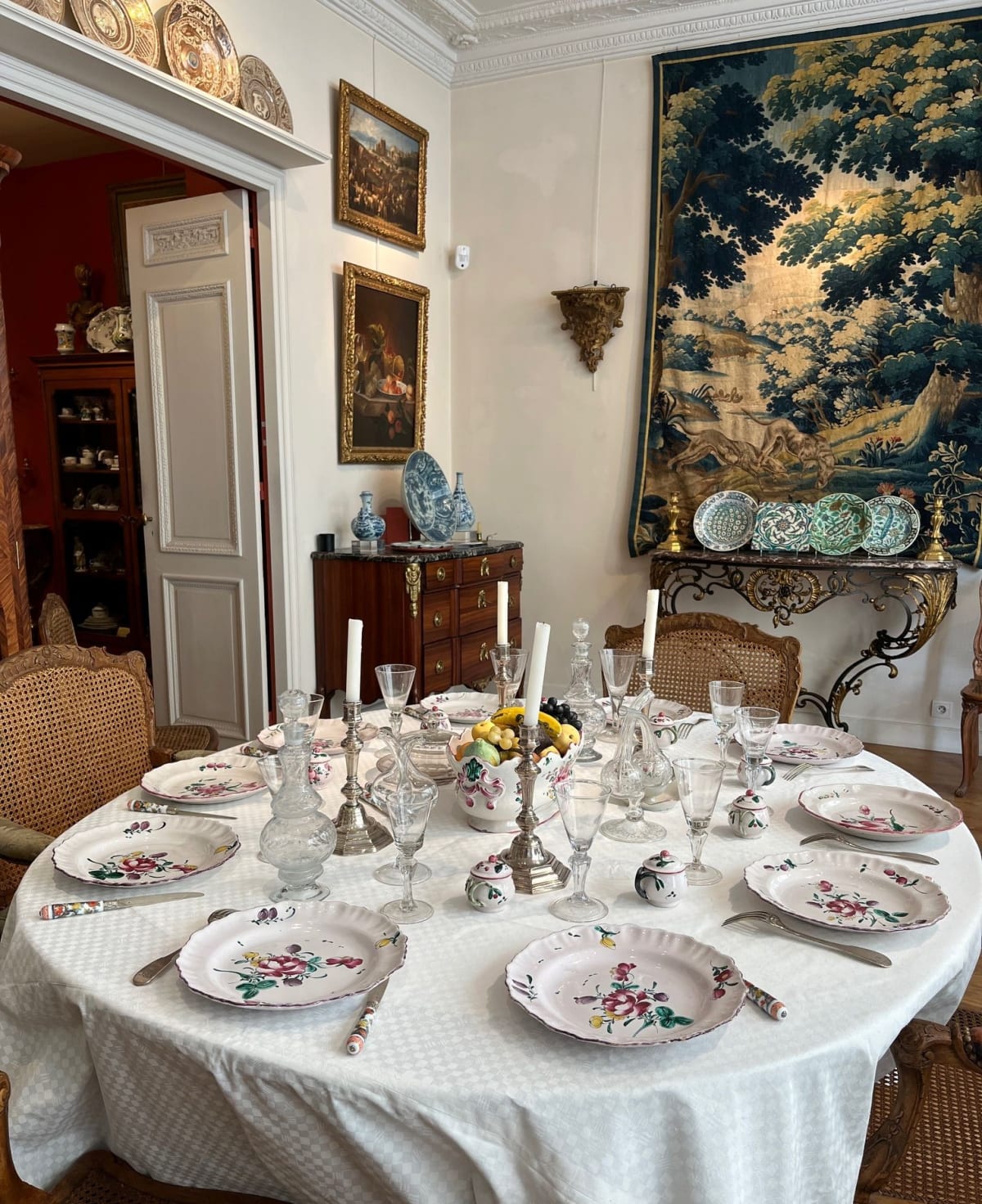
Founded over half a century ago in 1952, the Gallery is now located in 3 rue du Bac in the Carré Rive Gauche. JM Béalu & Fils are specialists in European and Oriental ceramics of the 16th to 18th century, and particularly majolica from Italy and porcelains from China, Meissen or Sevres and Iranian, Iznik, and Hispano-Moorish earthenware, as well as pieces from a wide range of French manufacturers: Rouen, Nevers, Marseille, Moustiers, Strasbourg …
The Gallery also presents French furniture and works of art from Louis XIV, Louis XV and Louis XVI periods.
The gallery exhibits collectible ceramics from Europe to the East, dating from the 16th to the 18th century and majolica and porcelain from China, Meissen, and Sèvres.
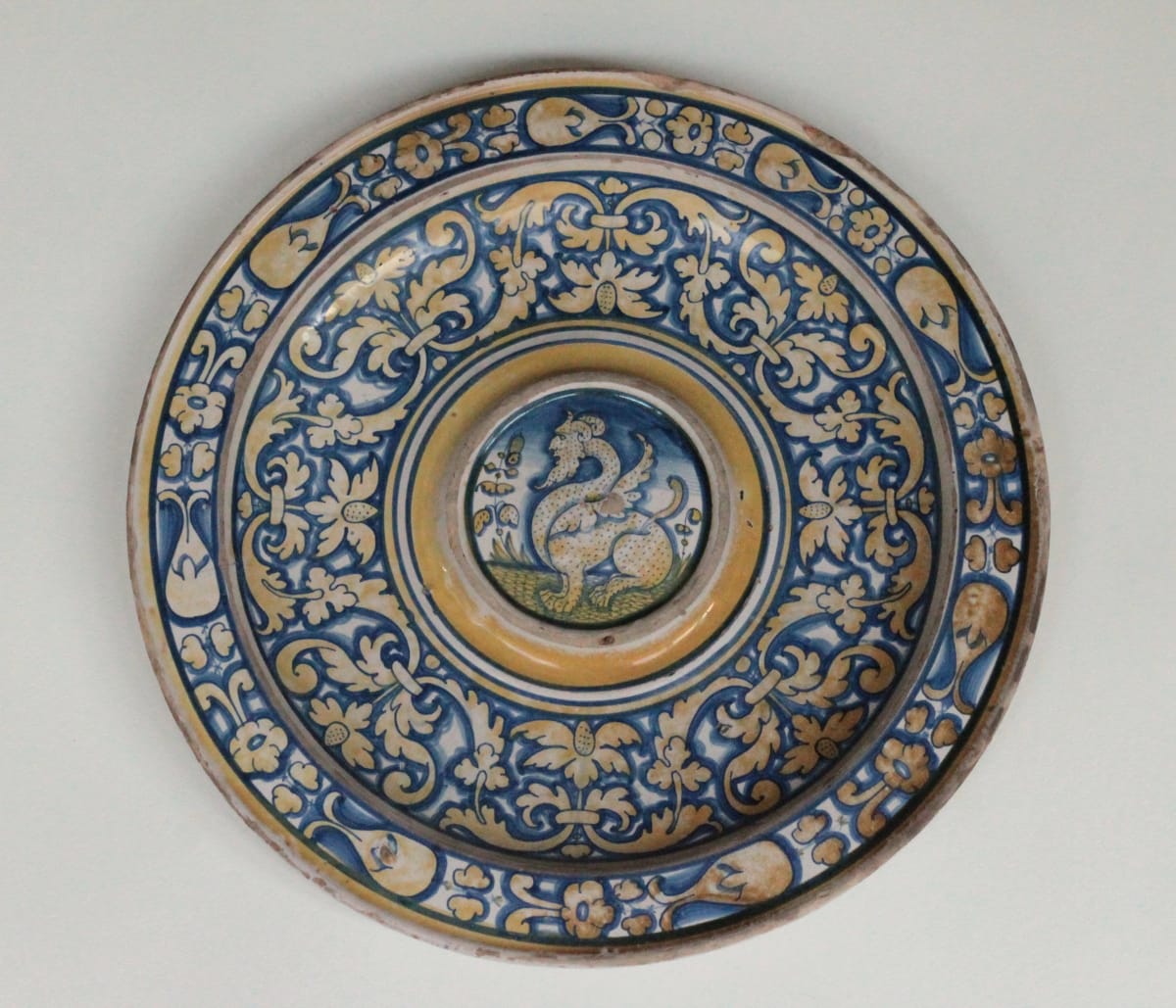
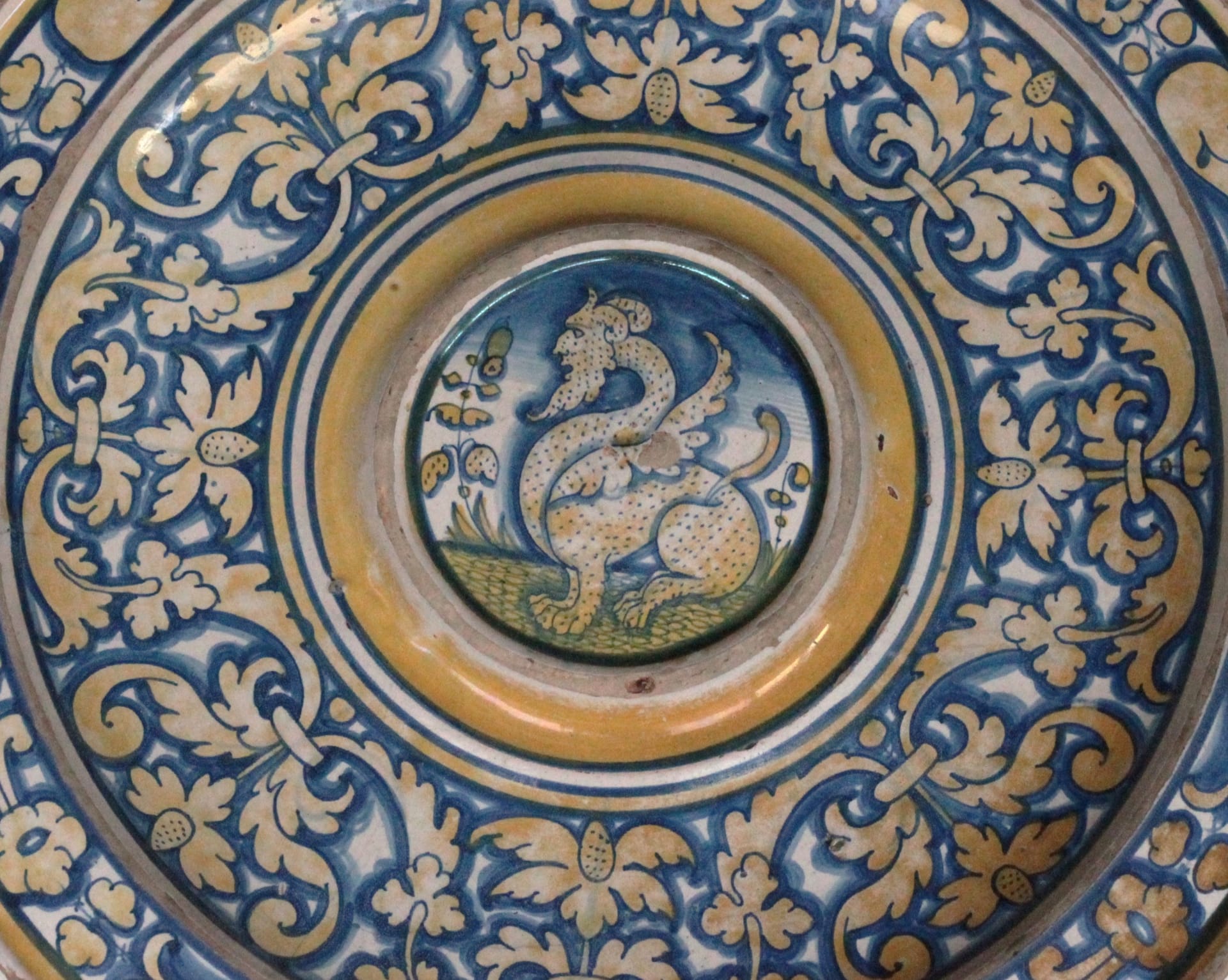
Deruta (Italy) majolica ewer or navel dish with a metallic gold-yellow lustre decoration
Deruta (Italy) majolica ewer or navel dish with a metallic gold-yellow lustre decoration, featuring in the center a bearded, horned, winged mythical creature framed by a lustre border and blue fillets. Inside the bowl, scrollwork foliage and stylized flowers, encircled, form a garland; on the rim, a band of scrolls, foliage, and flowers, between two fillets.
Circa 1525–1535.
Diameter: 33.5 cm.
Enamel wear, a crack at 6:30 and a repaired crack at 8:00.
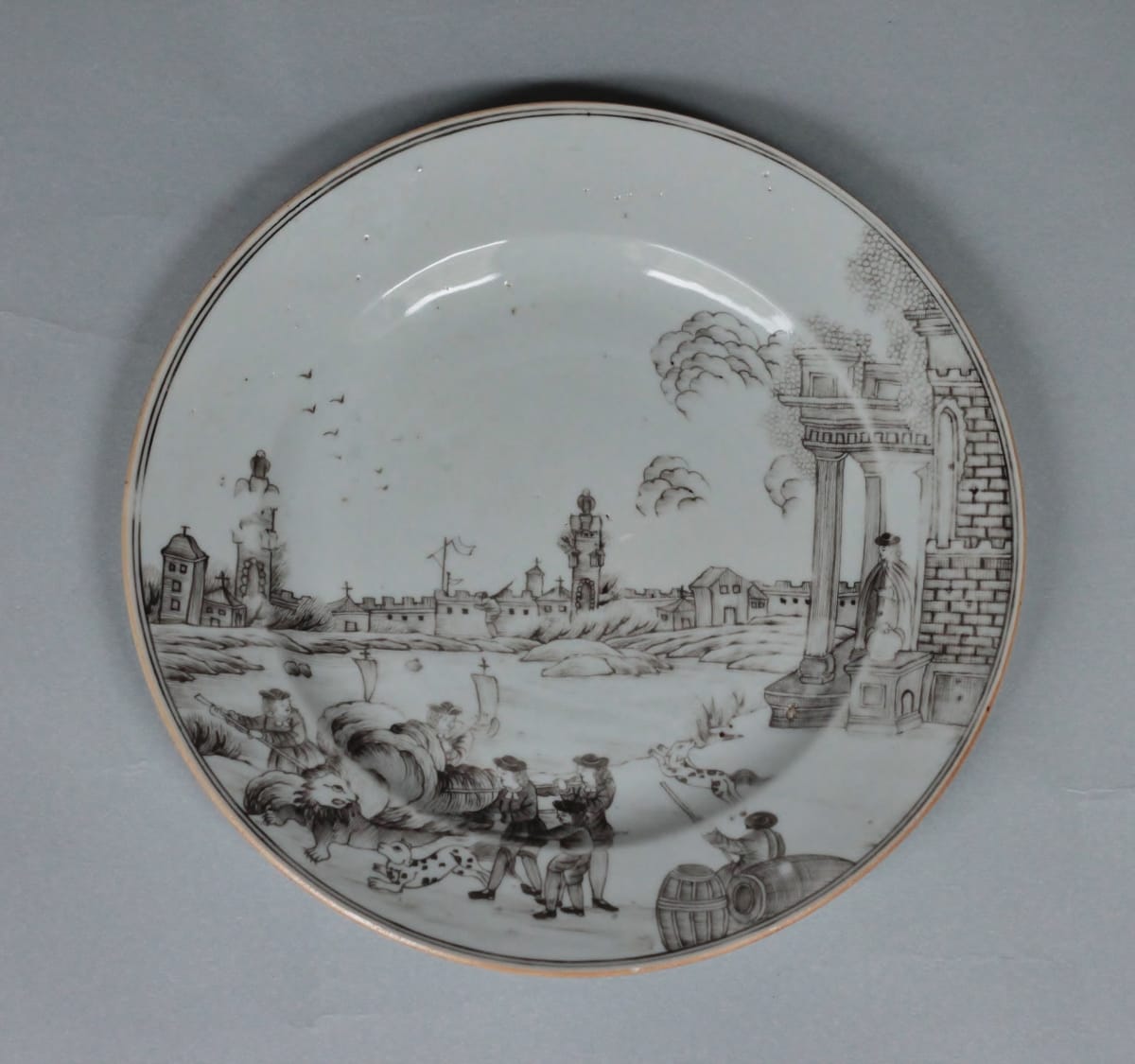
Chinese porcelain plate decorated in full grisaille
Chinese porcelain plate decorated in full grisaille with a scene depicting Dutchmen catching a lion with the help of dogs in the foreground, and a city surrounded by ramparts with a temple on the right in the background.
Qianlong period (1736-1795). 18th century.
Diameter: 23.5 cm.
Small chip on heel.
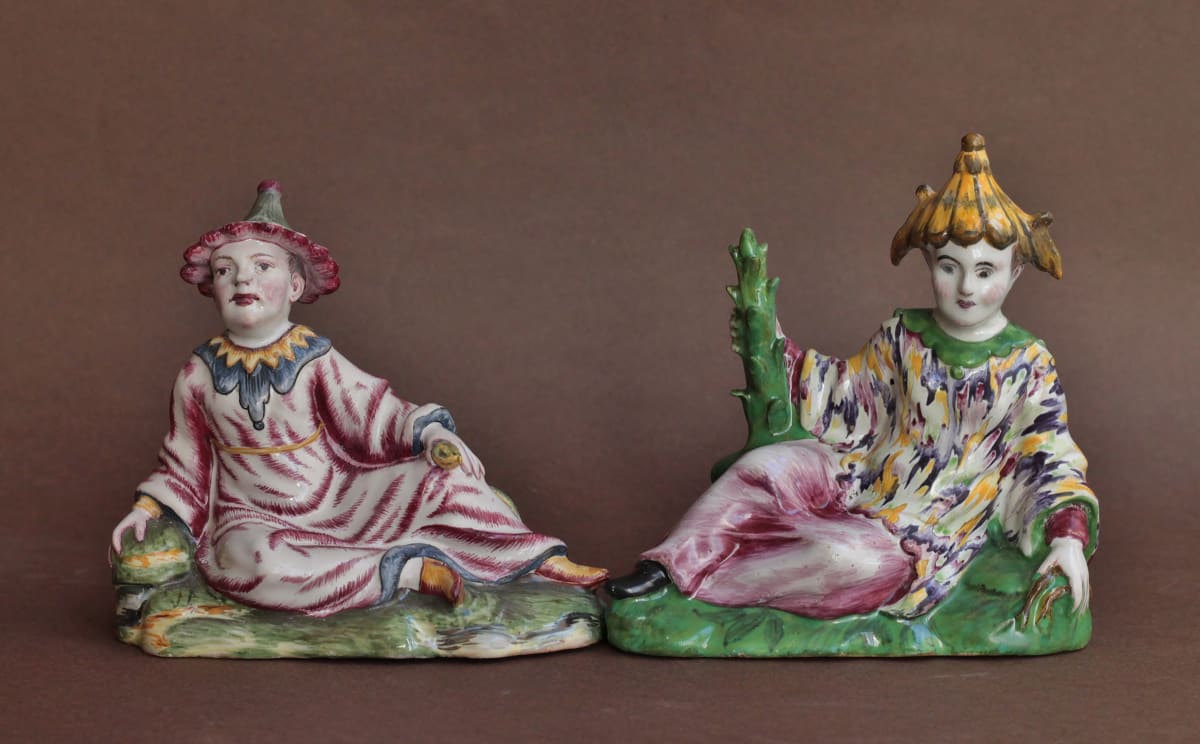
Two statuettes forming a pair in Strasbourg earthenware
Two statuettes forming a pair in Strasbourg earthenware depicting a Chinese couple reclining on a terrace with polychrome petit feu decoration. Model by Jean Guillaume Lanz*.
Manufacture de Paul Hannong, circa 1750-55, 18th century.
Length: 14 cm; Height: 14 cm.
The two heads have been glued back together, the tip of a hat and a chip at the base have been reworked, a nose and the palm tree have had paint reworked.
* Painter Adam Friedrich Löwenfinck and sculptor Johan Wilhem Lanz were Meissen defectors. Thanks to them, golden red, also known as “Cassius purple”, made its appearance in Strasbourg and the palette of Alsatian ceramics became unlimited.
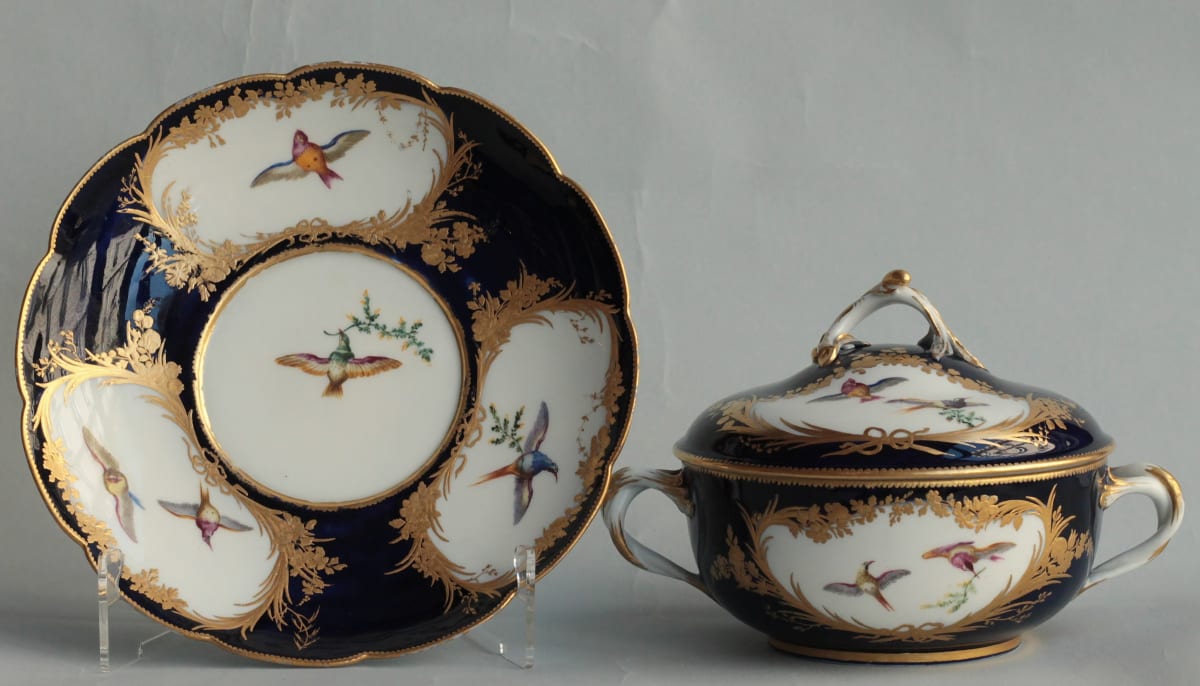
Round covered ecuelle and its display stand in Vincennes soft paste porcelain with polychrome decoration of birds
Round covered ecuelle and its display stand, second size, in Vincennes soft paste porcelain with polychrome decoration of birds in flight inscribed in rocaille cartouches surrounded by flowers and foliage in gold on a lapis blue ground. Gold wolf teeth on the edges.
Marked with two crossed L's and the letter A for 1754.
Four very light dots indicating the indeterminate painter's mark.
Incised mark under the stock.
Height of bowl: 13 cm; diameter of display stand: 21.3 cm.
Vertical cracking near a handle on the blue background extending to the bottom of the bowl and gold wolf's teeth on the rim of the bowl.
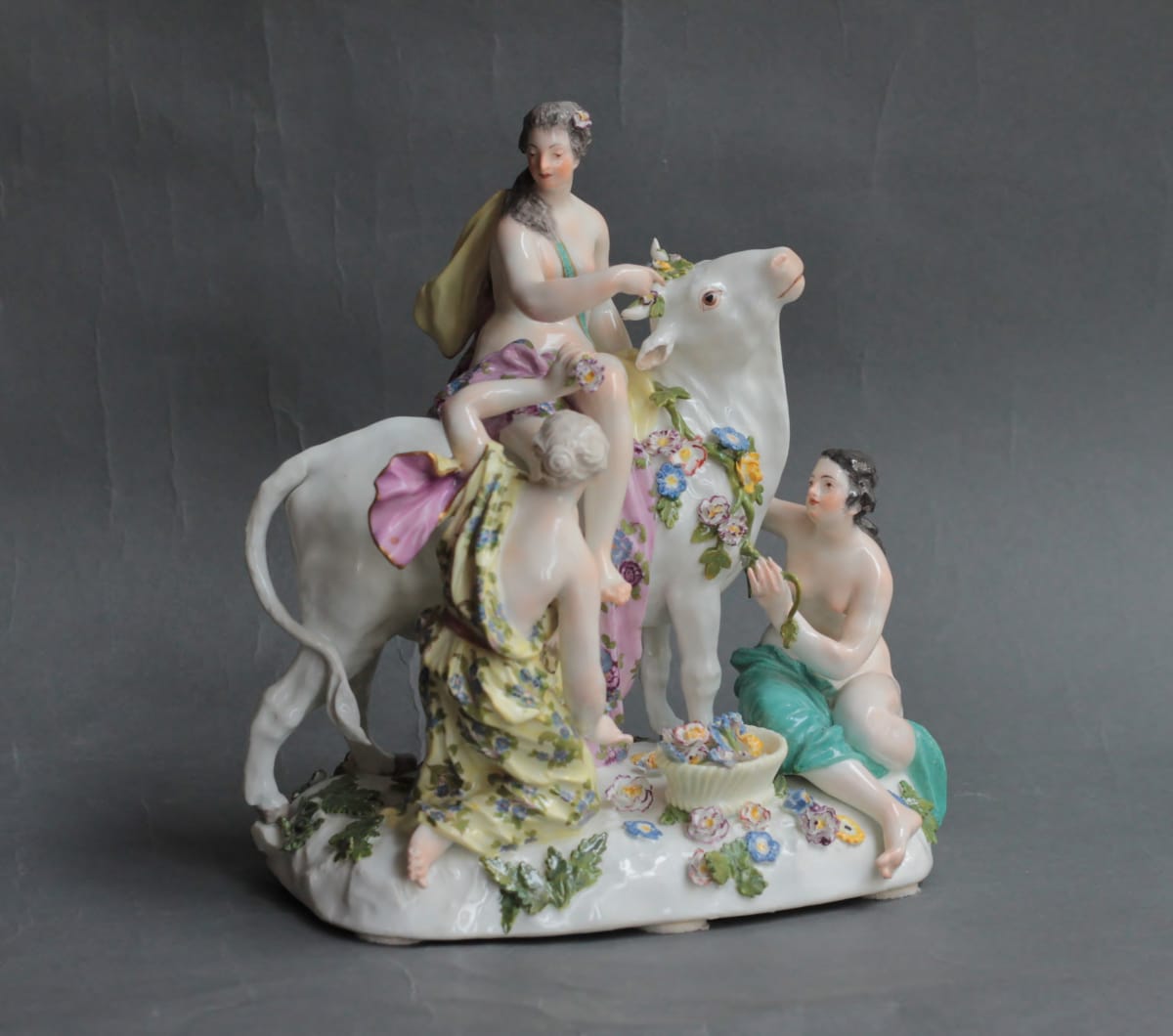
Meissen porcelain group
Meissen porcelain group depicting the abduction of Europa* seated on a white bull accompanied by two young women.
Model by J.J. Kandler and J.F. Eberlein from 1750.
Blue mark with two crossed swords under the base.
Circa 1752, mid 18th century.
Height: 22,5 cm; Width: 20 cm.
The left arm of the kneeling young woman on the left has been reattached, and the chip is repeated on the back of the tunic.
* Jupiter is in love with Europa, the legendary princess and daughter of the King of Phoenicia. He approaches her transformed into a white bull. She crowns him, flatters himand sits on him. The bull immediately carries her off to Crete. Europa will have three children by Jupiter. The bull becomes one of the signs of the zodiac.
Cf. Y.Adams, Meissen Figures 1730-1775 The Kandler Period, Schiffer publishing Ltd 2001, n°385 p. 141.